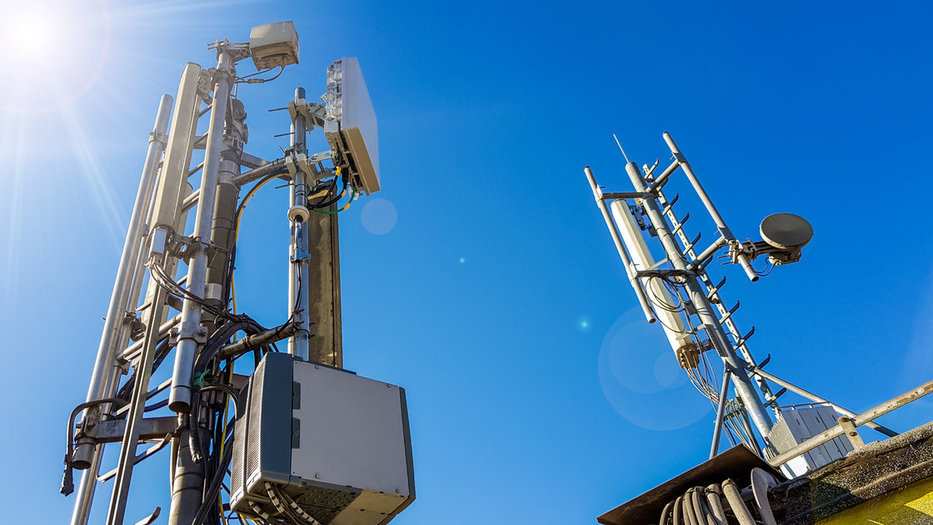
The #1 Question Field Techs Are Asking About Cellular RF
How do you keep massive MIMO beamforming stable when real-world interference and alignment drift hit harder than lab models predict? This question tops every crew chat and dispatch call right now. Techs report more dropped sectors and EVM spikes on C-band and 3.7 GHz sites than in prior years. You see the same pattern whether you climb for a Tier-1 carrier or service a private network small cell.
Essential Background and Current Real-World Status of Cellular RF
Cellular RF networks have moved past early 5G rollouts into dense 5G-Advanced deployments. Carriers now push higher-order modulation and dynamic beamforming across mmWave and mid-band spectrum. Field crews handle active antenna units that steer beams in milliseconds. Supply-chain delays on GaN power amplifiers eased in late 2025, yet crews still fight thermal drift on towers during summer peaks. Real sites show beam patterns shifting 2–4 degrees after wind events or ice loading—something simulation software rarely flags.
Different Approaches Being Deployed in the Field for Cellular RF + What Techs Are Actually Measuring
Operators choose between analog beamforming for cost-sensitive small cells and hybrid digital beamforming on macro towers. You measure the difference with a spectrum analyzer plus a phased-array probe. Field teams log EVM below 3.5 percent on good sectors and watch for ACPR degradation when temperature swings exceed 15 °C. Sweep traces now include beam-specific power masks rather than simple VSWR checks. Many crews also capture near-field scans to verify null placement before sign-off.
Design vs. Reality Consequences in Cellular RF Deployments
Paper designs assume perfect phase matching across 64 or 128 elements. On the mast you find connector torque variations and bracket flex that push sidelobes up 6 dB. A site that passes lab PIM testing at –150 dBc often fails once you add wind-induced sway. Real-world grounding loops and shared shelter racks create common-mode noise that kills uplink SINR. Techs who skip torque audits or skip re-alignment after wind storms spend extra truck rolls fixing the same sector.
Forward-Looking Predictions from a Field Perspective on Cellular RF
By mid-2027 you will see 6G sub-THz trials move from labs to selected stadiums and campuses. Early hardware will demand tighter thermal management and new test gear for 100 GHz+ paths. Crews that master current beam alignment tools and PIM hunting on active antennas will land the first contracts. Expect carriers to require documented beam-pattern verification on every new node instead of spot checks.
Specific Metrics, Test Methods, Standards & Developments Techs Should Track for Cellular RF
Track 3GPP Release 18 beam-management procedures and updated IEC PIM test limits. Carry a portable vector network analyzer rated past 6 GHz and a calibrated torque wrench set. Log daily temperature at the antenna when you commission hybrid beamforming units. Red-flag any EVM reading above 4 percent or return loss worse than 18 dB after alignment.
“Never trust the remote beam report alone. Climb, verify the mechanical tilt, and run a quick near-field scan. Saves you two return trips every time.” — Senior tower tech, Midwest region