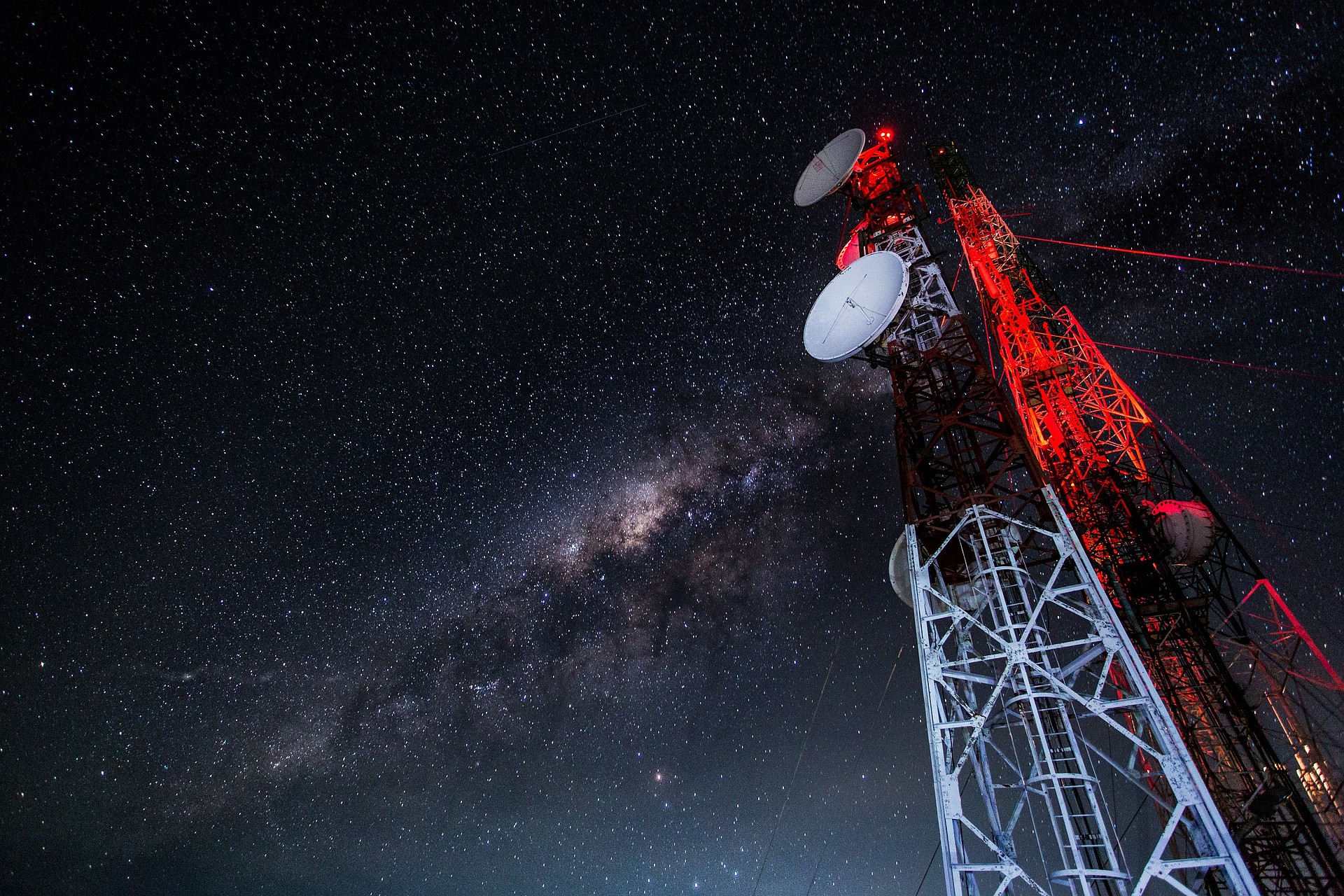
From silent skies to encrypted commands, the U.S. Air Force’s High Frequency Global Communications System (HFGCS) keeps aircraft connected across the globe—no matter how far they fly or what threats emerge.
While today’s military leans heavily on satellites and digital networks, one system continues to earn trust when absolute reliability is non-negotiable: high-frequency (HF) radio. The USAF HFGCS serves as the backbone of long-range voice communications for aircraft operating beyond the reach of conventional systems.
How HFGCS Works
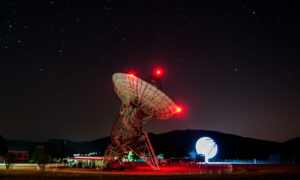
Instead of depending on vulnerable satellites, HFGCS uses HF radio waves that bounce off the Earth’s ionosphere, enabling reliable contact with aircraft thousands of miles away. This decades-old technology still outperforms modern alternatives in specific conditions thanks to its unmatched reach and resilience.
The system primarily operates on well-known frequencies such as 8992 kHz and 11175 kHz in USB (Upper Sideband) mode. These channels allow real-time, two-way voice communication with Air Force aircraft anywhere on Earth. If you’ve ever scanned the HF bands, you’ve likely heard the distinctive sound: strings of phonetic letters, robotic voices, and call signs like “MAINSAIL,” “REACH,” or “SKYKING.” Many of these transmissions are Emergency Action Messages (EAMs) — encrypted orders directed to nuclear-capable and global strike assets.
A Global and Resilient Network
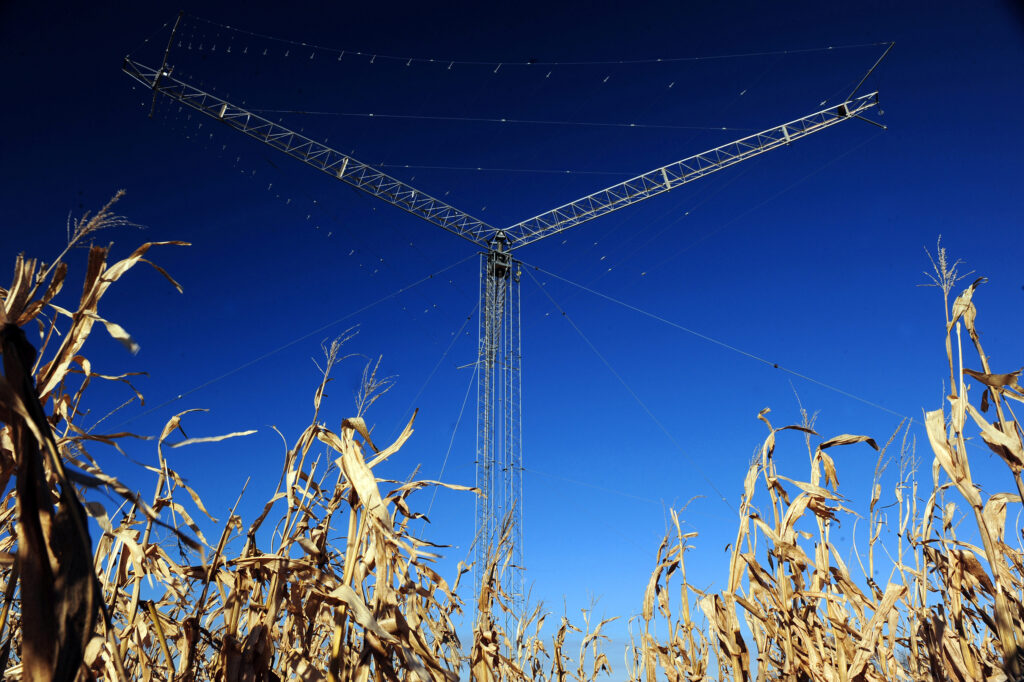
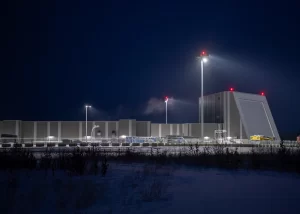
What makes HFGCS truly worldwide is its network of strategically located transmission sites, including Andrews Air Force Base (Maryland), Diego Garcia (Indian Ocean), Yokota Air Base (Japan), and others. This overlapping coverage creates redundancy and resilience. The system is extremely difficult to jam, independent of orbiting satellites, and nearly impossible to completely disable.
For mission planners, HFGCS is far more than a backup — it is a primary assured-communications asset. In scenarios where satellite links are denied, degraded, or destroyed by electronic warfare or anti-satellite weapons, HF radio remains the last dependable long-range solution.
Still Active and Evolving in 2026
Despite its Cold War origins, the HFGCS is very much alive and relevant today. In an era of increasing digital threats, cyberattacks, and electronic jamming, its analog simplicity has become even more valuable. The system handles everything from routine flight reports and radio checks to critical strategic commands.
Most transmissions sound cryptic to outsiders — by design. Much of the traffic is encrypted or uses structured phonetic formats. This has turned HFGCS monitoring into a popular niche hobby among shortwave listeners and amateur radio operators worldwide. Hobbyists often use basic HF receivers and longwire antennas to log activity on busy frequencies like 8992 kHz, 11175 kHz, and 13200 kHz, especially during military exercises or periods of heightened global tension.
Why HFGCS Still Matters
The Air Force isn’t alone in relying on HF. The U.S. Navy and other services maintain similar systems for ships at sea and joint operations. When advanced networks fail, forces routinely fall back on proven HF technology.
HFGCS runs 24/7. Pilots perform radio checks, controllers pass time synchronization, and units exchange routine data daily. This constant activity keeps crews proficient and the system ready for when it matters most.
For civilians and radio enthusiasts, the HFGCS offers a fascinating window into real-world military communications. It demonstrates that not every problem can be solved with satellites, fiber optics, or apps. Sometimes, a powerful HF signal reflecting off the ionosphere is the only way to reach the other side of the planet.
How to Listen In
Tuning into HFGCS is straightforward. All you need is a shortwave receiver capable of SSB (Single Sideband) reception and a decent antenna. Popular frequencies include:
- 8992 kHz
- 11175 kHz
- 13200 kHz
Activity often increases during large-scale exercises or transoceanic flights. While most messages will remain unintelligible, you’ll be listening to one of the most resilient military communications networks ever built.
In the age of satellites and digital everything, the USAF HFGCS stands as quiet proof that radio is far from dead — it’s simply more important than ever.